Everything you need to know about choosing and climbing Kilimanjaro.
Northern Circuit (9 days) and Lemosho (8 days) both have a 98% summit success rate. The extra days allow for better acclimatization, which is the key to reaching Uhuru Peak safely.
Marangu 5-Day starts from $1,550/person (Private, Max Days) — the most affordable option. It's the only route with hut accommodation, so you don't need to rent a sleeping bag. However, the shorter duration means a lower success rate (~90%).
Lemosho 8-Day is the best choice for first-timers. It has a gentle start, stunning scenery, excellent acclimatization profile, and a 98% summit rate. The 8-day itinerary gives your body time to adjust to the altitude gradually.
Lemosho is widely considered the most scenic route. You'll trek through five distinct climate zones — rainforest, moorland, alpine desert, and glacial — with breathtaking views of Kibo and the Shira Plateau. Machame (the "Whiskey Route") is also incredibly scenic with diverse landscapes.
All routes work great for solo travelers! You'll join a group of like-minded adventurers from around the world. Lemosho and Machame are the most popular for solo travelers because of the great group atmosphere and scenic variety.
Both are excellent routes. Lemosho (7-8 days) starts from the west side, is less crowded, and has the best acclimatization profile. Machame (6-7 days) starts from the south, is more popular, and has steeper sections. Lemosho has a slightly higher success rate (98% vs 95%).
The Northern Circuit is 9 days — the longest route. You spend more days on the mountain, which means more food, park fees, and crew costs. But the investment pays off: 98% summit success, remote scenery, and the best acclimatization of any route.
You don't need to be an athlete, but you should be able to walk 5-8 hours a day for several consecutive days. We recommend starting a fitness routine 2-3 months before: hiking, jogging, cycling, or swimming. The fitter you are, the more you'll enjoy the experience.
Kilimanjaro is a trekking mountain — no technical climbing or ropes needed. The challenge is the altitude, not the terrain. With proper acclimatization (choose an 8+ day route), most reasonably fit people can reach the summit.
No. Umbwe is the steepest and most direct route with rapid altitude gain. It's only recommended for very fit, experienced trekkers who have hiked at high altitude before. The summit success rate is only ~85%. Beginners should choose Lemosho or Machame.
On most days, you'll walk 5-7 hours. Summit day on most routes is 10-14 hours (midnight start to reach sunrise at the top). Walking pace is slow and steady — "pole pole" in Swahili — to help with acclimatization.
Altitude sickness (AMS) happens when you ascend too fast. Symptoms include headache, nausea, and fatigue. Prevention: choose a longer route (8-9 days), walk slowly, drink plenty of water, and listen to your guide. Our guides carry pulse oximeters and monitor your oxygen levels daily.
It's not mandatory, but many climbers take Diamox (Acetazolamide) as a预防 measure. It helps your body acclimatize faster. Consult your doctor before the climb. Choose an 8+ day route for the best natural acclimatization.
Yes! Kilimanjaro is one of the safest major mountains in the world. With an experienced operator like Bush Lion Tours, trained guides, proper acclimatization, and emergency protocols, you're in good hands. We carry first aid kits, pulse oximeters, and have evacuation plans in place.
If you develop severe altitude sickness, our guides will descend with you immediately. Evacuation by porters or vehicle is available on most routes. This is included in your package. Your safety is always the top priority — there's no shame in turning back.
Only $100 secures your spot on any departure. The remaining balance is due before your climb date. We accept bank transfer, mobile money (M-Pesa), and card payments.
30+ days before departure: full refund (minus deposit). 15-29 days: 50% of balance refunded. Within 14 days: no refund, but you can reschedule to another date at no extra cost. We understand plans change!
We recommend booking 2-3 months in advance, especially for peak season (June-October, January-March). However, we often have last-minute availability. Our departures run guaranteed — even if you're the only one booked, the climb goes ahead.
Yes! Private group bookings are available for 4+ people. You get a dedicated guide, flexible schedule, and customized experience. Contact us for a group quote.
Camping routes (Lemosho, Machame, Northern Circuit, Rongai, Umbwe): You sleep in tents on campsites. More flexibility, wilder experience. Hut route (Marangu): You sleep in mountain huts with beds and shelter. More comfortable, but more crowded.
Yes. Camping routes have portable toilet tents at each campsite. Marangu huts have basic bathroom facilities. We also offer upgraded portable toilets as an optional add-on ($20-30 per climb) for extra comfort.
Surprisingly good! Our cook prepares full meals: breakfast (eggs, pancakes, fruit), lunch (soup, rice, meat/veg), and dinner (pasta, meat, vegetables). We accommodate vegetarian, vegan, gluten-free, and other dietary needs — just let us know when booking.
We provide camping equipment, sleeping mats, and all meals. You'll need: hiking boots (broken in!), warm layers, rain jacket, sleeping bag (can rent locally for ~$20), gloves, hat, sunscreen, headlamp, and a daypack. We send a detailed packing list after booking.
Yes! Sleeping bags, trekking poles, and other gear are available for rent locally. This saves you the hassle of bringing bulky items from home. Contact us for current rental prices.
Yes — waterproof hiking boots with good ankle support are essential. Break them in at least 2-3 months before the climb. Gaiters are recommended for the scree sections on summit day.
The best months are January-March and June-October. Jan-Mar is warmer with fresh snow on the summit — stunning views. Jun-Oct is the main dry season with clear skies. Avoid April-May (long rains) and November (short rains).
At the summit (5,895m), temperatures can drop to -15°C to -25°C at night. During the day, it's around -5°C to 5°C. Wind chill makes it feel even colder. Layering is key — thermal base layers, fleece, and a good down jacket.
The glaciers are shrinking but still present. You'll see ice and snow near the summit, especially Jan-Mar when there's fresh snowfall. The contrast of snow against the African sky is unforgettable.
Groups are typically 4-12 climbers. We keep groups small enough for a personal experience but large enough for great camaraderie. Private group bookings are available for 4+ people.
The ratio depends on group size, but typically: 1 lead guide, 1-2 assistant guides, 1 cook, and 3-5 porters per climber. Porters carry camping equipment, food, and your duffel bag (max 15kg).
Tipping is customary and appreciated. Recommended: $20-30/day for lead guide, $15-20/day for assistant guides, $10/day for cook, $8-10/day for porters. Total per climber is typically $250-350 for the full trek. Tips are shared at the end.
Fly into Kilimanjaro International Airport (JRO). We pick you up and transfer you to your hotel in Moshi — included in your package! Alternatively, fly into Dar es Salaam (DAR) and take a bus or domestic flight.
Most nationalities need a tourist visa ($50 USD). You can get it on arrival at the airport or apply online via the Tanzania Immigration website. We'll send instructions after booking.
Yes! Travel insurance is mandatory. Your policy must cover high-altitude trekking (up to 6,000m) and emergency helicopter evacuation. Regular travel insurance usually doesn't cover this — check with your provider.
Yellow fever vaccination is required if coming from an endemic area. Hepatitis A, Typhoid, and Tetanus are recommended. Consult your travel doctor 6-8 weeks before departure.
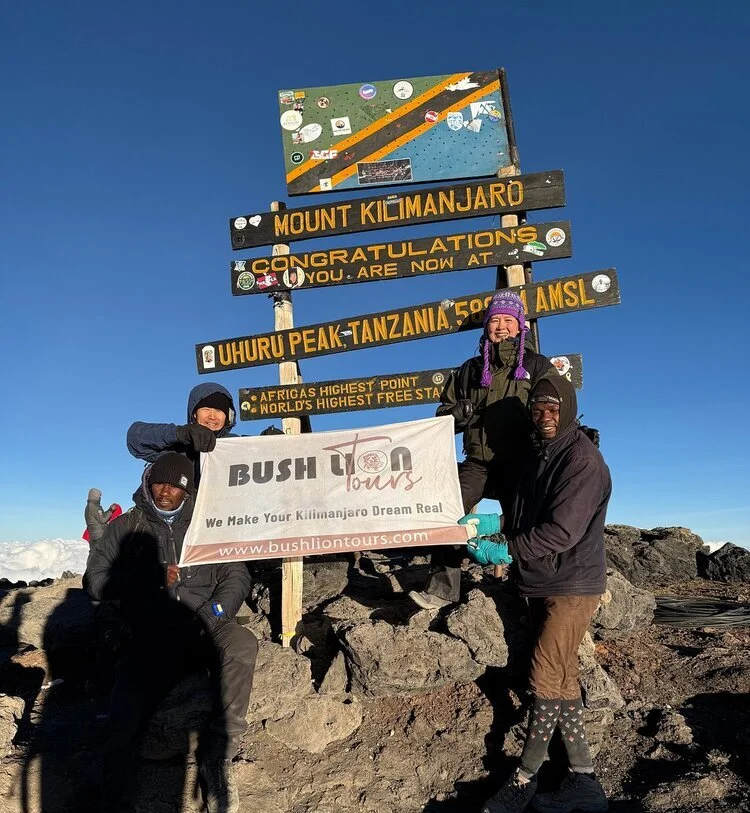
You'll wake up around midnight and start climbing by 1-2 AM. The ascent takes 6-8 hours in the dark with headlamps. You'll reach Uhuru Peak (5,895m) for sunrise — an unforgettable moment! Then descend to Mweka Camp (5-6 hours). It's the hardest but most rewarding part of the climb.
With the right route (8+ days) and our experienced guides, your chances are excellent: 98% for Lemosho/Northern Circuit, 95% for Machame, 90% for Marangu. The key is choosing a longer route and walking slowly.
Some camps have basic Wi-Fi for a fee ($5-10). Connection is slow and unreliable. We recommend buying a local SIM card (Vodacom or Airtel) for data. Most climbers disconnect and enjoy the experience!
Yes! You'll receive an official Kilimanjaro summit certificate from TANAPA (Tanzania National Parks Authority). It's a beautiful memento of your achievement.
Many climbers add a Serengeti safari or Zanzibar beach trip after their climb. We can arrange both! Moshi also has hot springs, coffee tours, and cultural experiences to enjoy while you recover.
Most people feel tired for 1-3 days after descending. Legs are sore, appetite may be low. Plan 1-2 rest days in Moshi before flying home. Full recovery takes about 1-2 weeks.
Ready to Choose Your Route?
Not sure which route is right for you? Chat with us on WhatsApp and we'll help you pick the perfect one.